MVP Development Cost:
Scope, Estimates and Quote Comparison
Understand Cursopic’s $24,000–45,000 base MVP range, the scope decisions that affect cost, and how to compare development quotes and ongoing expenses.
At Cursopic, our base MVP development range is $24,000–45,000 USD, with an estimated timeline of 8–12 weeks for that scope. It covers UX/UI design, development and QA for one core workflow, up to two user roles, standard sign-in, a basic admin panel and one integration with a documented API.
Where a project falls in that range depends on how much work each of those items involves. It lands closer to $24,000 when the core workflow is short (a few screens and one path from start to finish), when the integration only brings data in (new orders from your online shop, for example), and when you already have brand guidelines we can design with. It moves towards $45,000 when the workflow has more steps and exceptions (a request can be sent back, put on hold or cancelled), when the integration also sends changes back so both systems stay up to date, or when there are no brand guidelines yet and the interface needs a visual style of its own. We fix the price once the scope is agreed.
A third user role, payments through a hosted checkout or a second integration add to that range, and the estimator shows by how much. Anything beyond that, such as more roles or integrations, custom billing, AI features, offline mode, systems without a documented API, hardware or regulated data, is estimated with you once we have reviewed the scope.
When comparing proposals, start with the release each team is pricing. A lower total is useful only if it covers the work you need to put the product in users’ hands.
What changes an MVP estimate?
Four areas affect how much work the first release needs.
1. The workflow and the people using it
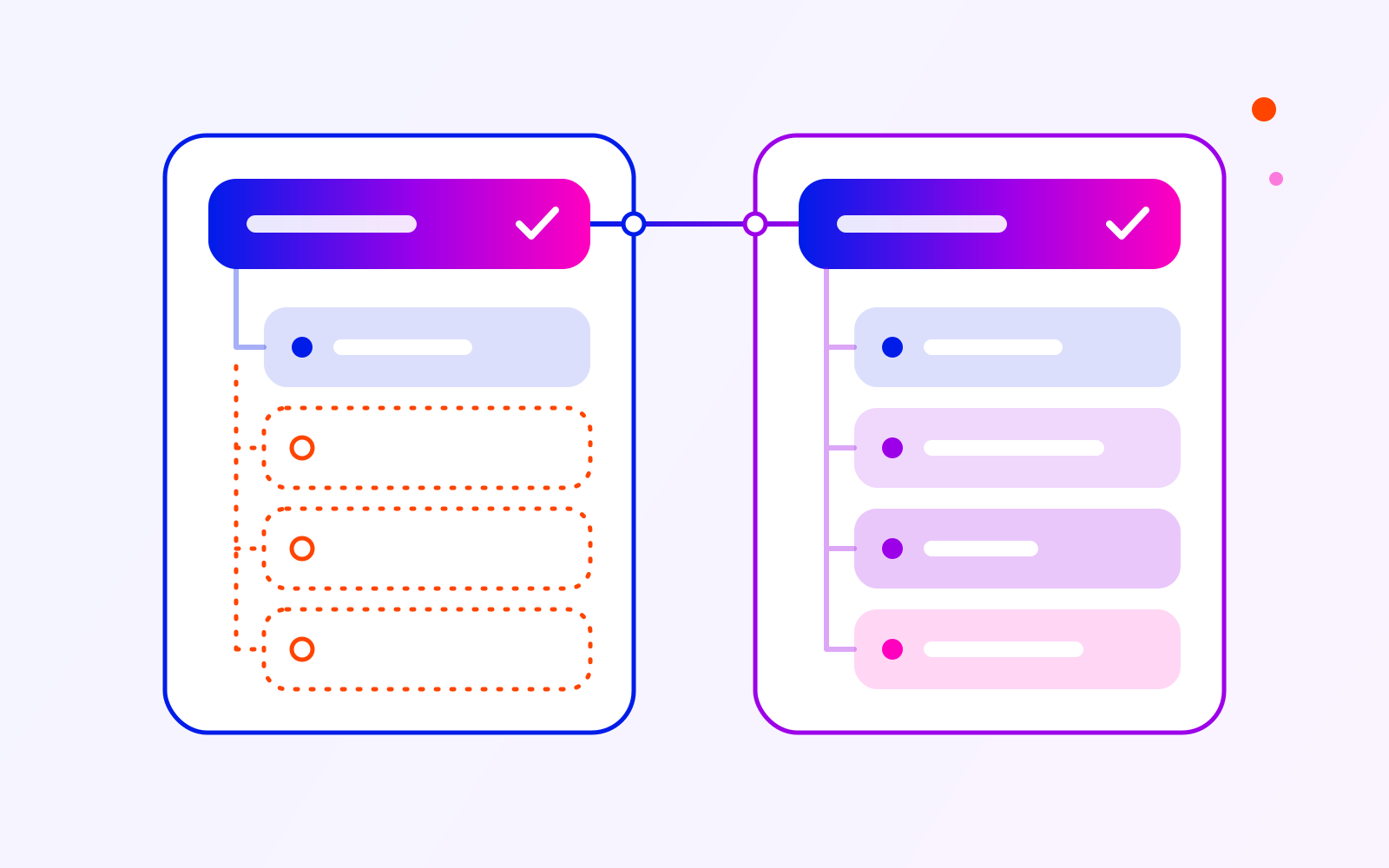
The base package covers one core workflow used by up to two roles. Every role you add, and every exception the first release has to handle, adds work to design, build and test.
For example, a customer submitting a request and an operator processing it need different screens and permissions. A manager who approves exceptions would be a third role, with its own screens and approval rules.
- Customersubmits a request
- Operatorprocesses it
Different screens and permissions
- Managerapproves exceptions
A third role, with its own screens and rules
2. The systems the product connects to
The base package includes one integration with a system that has a documented API. A second integration adds to the range. A system without a documented API is estimated separately, because the team first has to work out how to exchange data with it.
“Connect our CRM” can also mean very different amounts of work. Which records move between the systems, in which direction and how quickly? What should happen when access expires or a request fails? API documentation and a test account let the team check those answers before it commits to a price.
3. The behaviour behind an AI feature
AI features are not part of the base package, and a feature’s name says little about the work behind it. The price depends on the behaviour users must be able to rely on. If agents share information, how should they handle duplicated or conflicting facts? If usage has a limit, what happens when a user reaches it? Each behaviour like this has to be built and tested, so it adds to the estimate. The example below shows what one of them involved.
4. What the team will hand over
Proposals differ in what you receive at launch: who deploys the product, which checks are run, and what access and instructions you get. Deployment and handover take time, so a proposal that leaves them out can look cheaper than one that includes them. With our MVP service, we release to your first users and hand over the code, design files and documentation.
A real example: what “shared agent memory” involved
This example comes from the AI agent platform MVP we built for an AI startup. Users could assemble a team of agents for a task. According to an engineer who worked on the project, the startup raised $3 million in funding.
What follows is based on that engineer’s account. It shows scope, not cost: the range above describes our base package.
The agents shared facts through a common memory and passed work through a coordinator. One agent could reuse information another had already found.
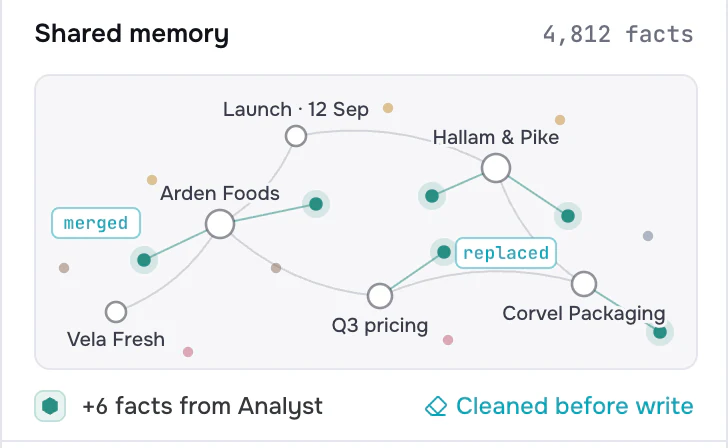
In testing, agents recorded the same facts in different words, some records contradicted each other, and outdated information affected their answers.
So the memory needed more than storage. Duplicates had to be merged, each fact needed a source and a timestamp, and conflicts needed a rule: in that version, the more recently recorded fact took priority.
Two proposals can both list “shared memory” and still price different work. One may cover storing and retrieving facts. Another may also cover duplicates, conflicting records and the checks used to evaluate the agents’ answers. Agree what the feature has to do before you compare totals.
Compare quotes against the same release
Send each team the same description of your first release, then check every proposal against the lines below and note what each one includes, excludes and assumes. “Not quoted” marks a line a proposal doesn’t mention yet: ask about it, because a missing line is not a zero.
| What to price | Ask each team | Offer A | Offer B |
|---|---|---|---|
| Core workflow and roles: one-off cost | Which users, permissions and exception paths are covered? | Not quoted | Not quoted |
| Design and QA: one-off cost | Which screens, error states and checks are included? | Not quoted | Not quoted |
| Integration: one-off cost, plus any provider fees | What happens when a request fails or access expires? | Not quoted | Not quoted |
| Shared memory (AI products): one-off cost, plus model and storage usage | Does it cover duplicates, conflicting facts, source tracking and checks of the agents’ answers? | Not quoted | Not quoted |
| Launch and handover: one-off set-up, then running costs | What will you hand over, and who runs the product afterwards? | Not quoted | Not quoted |
| Hosting and external services: recurring or usage-based costs | Which services are needed, and what usage does the estimate assume? | Not quoted | Not quoted |
| Support and new features: priced per agreement | How are fixes, maintenance and new work priced and approved? | Not quoted | Not quoted |
Core workflow and roles: one-off cost
- Ask each team
- Which users, permissions and exception paths are covered?
- Offer A
- Not quoted
- Offer B
- Not quoted
Design and QA: one-off cost
- Ask each team
- Which screens, error states and checks are included?
- Offer A
- Not quoted
- Offer B
- Not quoted
Integration: one-off cost, plus any provider fees
- Ask each team
- What happens when a request fails or access expires?
- Offer A
- Not quoted
- Offer B
- Not quoted
Shared memory (AI products): one-off cost, plus model and storage usage
- Ask each team
- Does it cover duplicates, conflicting facts, source tracking and checks of the agents’ answers?
- Offer A
- Not quoted
- Offer B
- Not quoted
Launch and handover: one-off set-up, then running costs
- Ask each team
- What will you hand over, and who runs the product afterwards?
- Offer A
- Not quoted
- Offer B
- Not quoted
Hosting and external services: recurring or usage-based costs
- Ask each team
- Which services are needed, and what usage does the estimate assume?
- Offer A
- Not quoted
- Offer B
- Not quoted
Support and new features: priced per agreement
- Ask each team
- How are fixes, maintenance and new work priced and approved?
- Offer A
- Not quoted
- Offer B
- Not quoted
Ask for answers you can check. A short list of scenarios, each with the result you expect, tells you more than “fully tested” and gives you something to accept the work against.
If a proposal leaves a dependency open, such as access to a system nobody has tried yet, ask how the team will check it and when the price will be confirmed. Then compare each total together with the assumptions behind it.
Budget for what happens after development
Keep four amounts visible in your planning: the initial build, the services that run it, ongoing support and subsequent product changes.
Our base price covers design, development and QA. Hosting, third-party licences and usage charges are not included, and published prices are in USD, excluding taxes where applicable. An AI product’s model and storage costs grow with use, so ask what level of use any running-cost estimate assumes.
For 30 days after handover, we fix bugs within the delivered, agreed scope at no extra cost. Beyond that, agree how support works and how new features are estimated.
Prepare a first release that can be priced
Before you ask for a quote, write down:
- The main task: who starts it, what they need to finish it and what happens next.
- The roles: who can view, change or approve the result, and which exceptions must work in the first release.
- The connections: the systems involved, their API documentation, sample data and who gives access.
- AI behaviour, if any: typical tasks, examples of acceptable output and the cases that should stop for human review.
- How you will accept it: a few scenarios, each with the result you expect, checked before handover.
- The launch: where the product will run, any existing designs or code, and who runs it afterwards.
- The deadline: any fixed date, and what has to be usable by then.
- Who decides: the person on your side who settles scope questions during the project.
Our guide to what belongs in your first release shows how to separate that scope from later ideas.
With our MVP development service, we help narrow the first release and agree a fixed price for its scope. If a date is already set, the timeline is agreed first and the first release is cut to fit it. Any additional work is priced for your approval before it starts.