



Orders processed a day.
Across all sellers on the platform.
Platform-wide volumeWe connect marketplaces, CRM, ERP, stock and payments, and take over the copying, checking and re-keying between them. Cases a rule cannot decide go to a person.
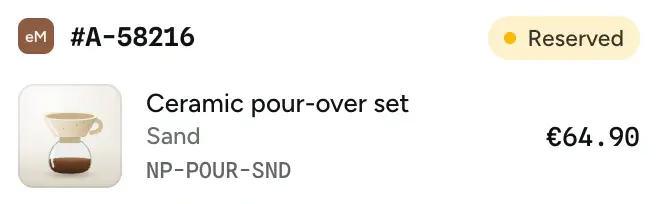
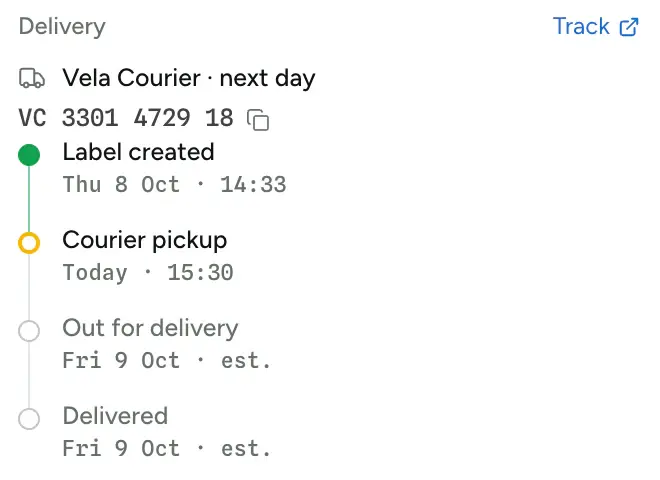
An order arrives from eMAG
The connector brings the order in and records it once. If eMAG sends the same order again, nothing is added.
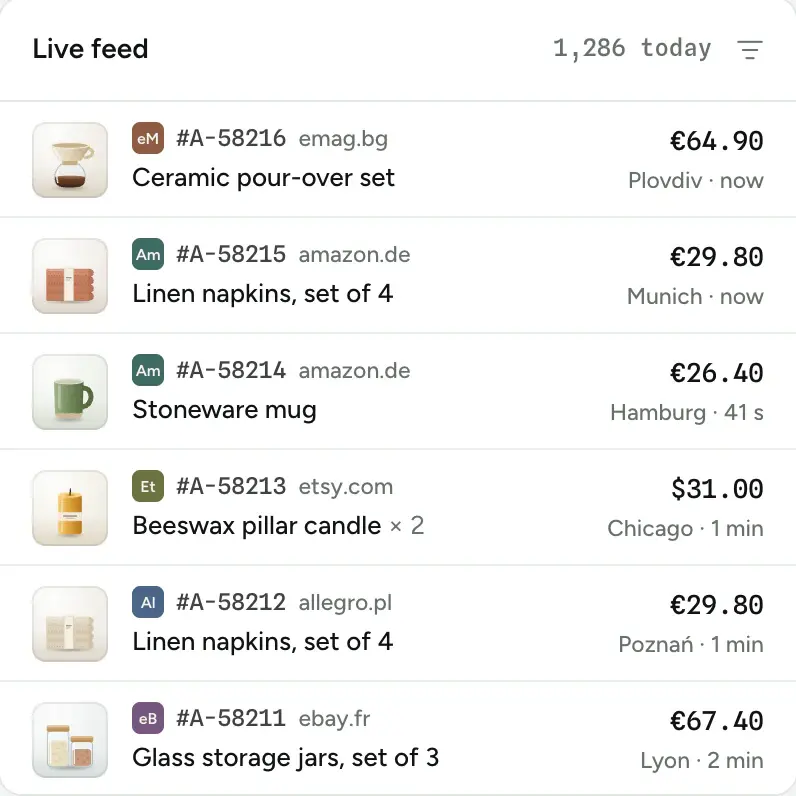
Order path#A-58216
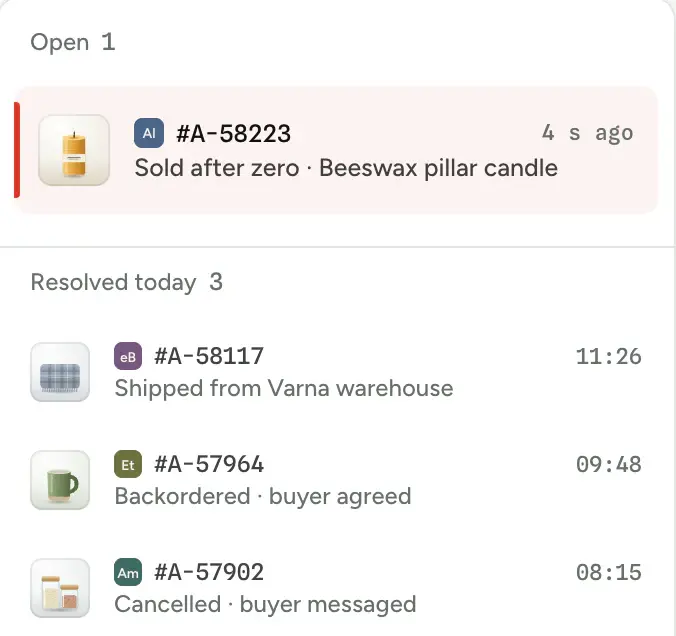
Conflict queueStock already gone
Across all sellers on the platform.
Platform-wide volumeMarketplace seller platformStock, orders, buyer messages, returns and payments for sellers on five marketplaces.
The reported reduction in the time to process and ship an order.
From the first connectors to the multi-tenant launch.
Usually with a cost the team feels every day.
Stock, orders or statuses differ from one system to the next, updates arrive late, and the last unit can be sold twice. A sale against outdated stock can end in a cancellation.
Seen inMarketplace seller platform
Customer messages arrive on several networks and accounts at once, and keeping up means switching between apps. They belong in one queue for all accounts.
Answering a simple question means pulling data from several systems, matching records by hand and hoping nothing changed in between.
Seen inResearch data platform
Returns, refunds and approvals follow clear rules, yet someone handles each case by hand. The rules exist; nothing applies them.
Check them in this order, and test each one against your exceptions as well as the everyday case.
A good fit when
Check before choosing
Runs inside a product you already use. Its settings decide what it can do.
How to chooseLimits run out, events arrive twice, a record fits no rule. Each case gets a set path.
The other systems keep getting their updates.
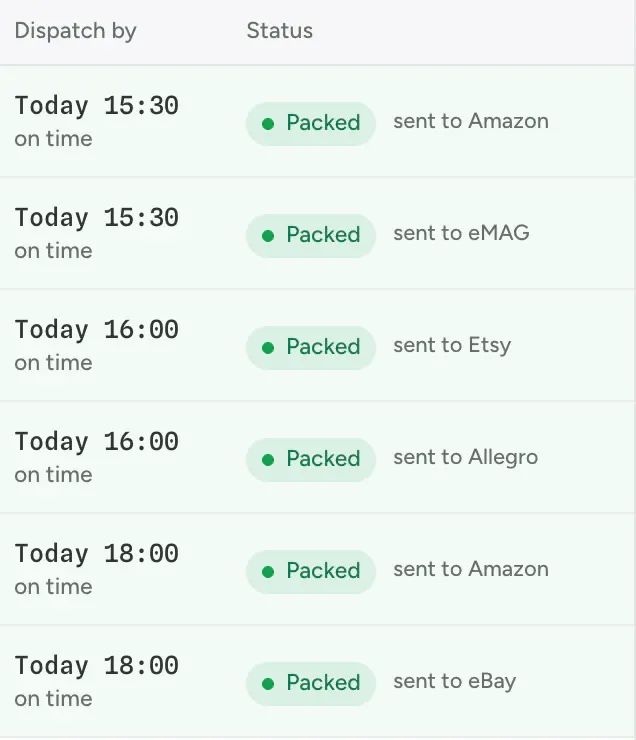
Over the limit, it waits its turn. Each system gets updates through its own queue, at the pace its API allows. A call that fails for a temporary reason is retried after a growing pause. For a stock figure, only the latest value is sent, and a drop to zero goes first.
Each incoming order or event is looked up by its identifier before the integration acts, so one that arrives twice is recorded once. Where the receiving system allows it, a retried call is designed to have the same effect as the first.
A record no rule can settle, or one still failing once the retries run out, waits in an exception queue with its reason, where a person sees it and decides.
Most projects combine several of these, each scoped around one process and the people who run it.
Two-way connections built around each API's rate limits, data model and error responses, so records move between systems instead of being re-typed.
Customers, orders, invoices and stock exchanged between your CRM, ERP and the tools around them, with one system named as the owner of each record.
Orders, stock, statuses and returns across the marketplaces and shops you sell on, with one stock figure behind every listing.
Rules that move routine work forward, such as refunds within limits, routing and notifications, with a review queue for the cases the rules do not cover.
Many sources brought into one data store, streamed or loaded on a schedule, then cleaned and linked, so a report no longer starts with an export.
A focused screen where your team sees what the automation did, resolves what it could not and changes rule settings.
One process at a time, measured as it runs today. You approve each step, and the manual path stays in place until the new one matches it on real data.
We follow one process from trigger to result: its systems, record owners, rules, exceptions and how it performs today. Some steps are better removed than automated.
You get Process map · Baseline · Exception list
You decideWhich process goes first
We review each system's API, access and limits, and agree which one holds the truth for each record. Then we agree the scope, the timeline and a fixed price for it.
You get Access review · Source of truth per record · Fixed price
You decideApprove the scope and price
Connectors with queues and retries, the rules and, where needed, a screen for the cases a person decides. Every change is reviewed by a second senior engineer.
You get Connectors and rules · Error handling · Test environment
You decideAccept each milestone
The automation handles real data next to your team's usual work, without acting on live systems yet. We compare results on agreed checks, then switch over.
You get Parallel run · Comparison of results · Switch-over plan
You decideWhen to switch over
Code, documentation and the activity log go to your team. For 30 days after handover, bugs within the delivered, agreed scope are fixed at no extra cost.
You get Documentation · Activity log · 30 days of bug fixes
You decideRun it yourselves or with us
Client work · Heaven&Hell
Heaven&Hell needed its mobile app and self-service kiosk to work with the café's POS. Our team built both Flutter products and the POS integration, connecting the customer-facing ordering experience with the system used by the business. This gave the app and kiosk a place in the café's operations, alongside the promotions and personalised offers that encouraged guests to return.

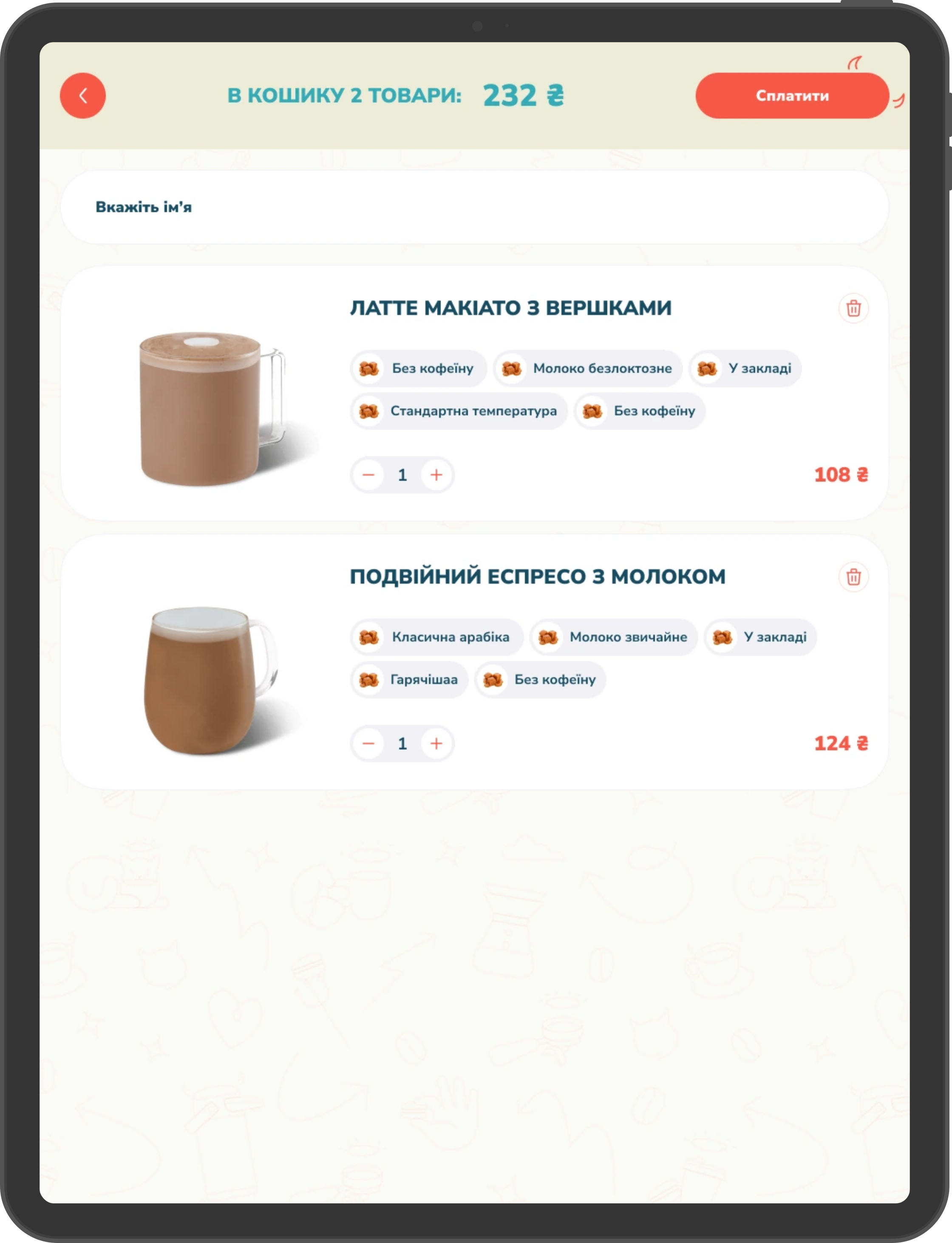
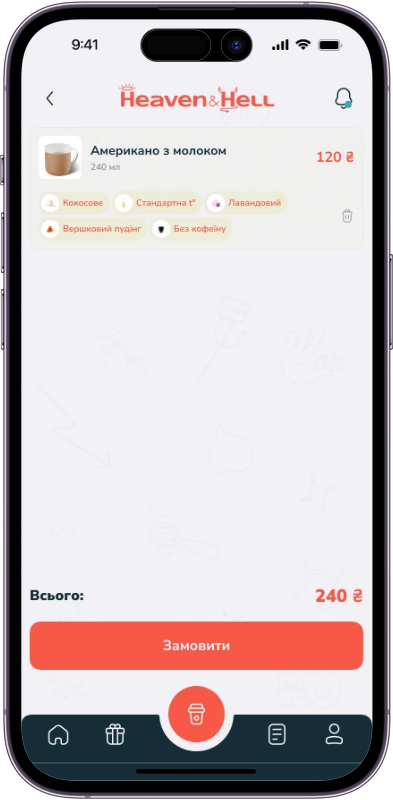
Guests order on their phone or in the café
Built by our team
The system the business uses
The price follows the scope and is agreed before work starts.
Between two systems with documented APIs: data mapping, error handling and an activity log, then testing and handoff to your team.
Several systems, the rules between them and a screen for the exceptions, built in stages.
New rules, new connectors and support after launch, from the team that built it.
You own the code, with access from day one.
30 days of bug fixes within the delivered, agreed scope.
Tell us which systems are involved and where your team copies data by hand. We will come back with questions, a first view of the process and how we would connect it.
Discuss your projectIt depends on how many systems connect and in which directions, the quality of their APIs, how many cases the rules decide and how many need a person, the volume of data and how much history has to move, and who monitors the integration after handover. After mapping the process and checking the systems, we agree a fixed price for a clear scope before building. You approve the cost of any additional work before it starts.
We agree the timeline with the scope, once the process is mapped and the systems are checked. One workflow between two systems is a much smaller job than a process that runs through several. For scale, the research data platform we built connected more than 50 sources in four months, followed by a month of support.
Start with one that runs often, follows clear rules and costs time or causes errors today, such as order intake, stock updates or a weekly report. Steps that need judgment on every case stay with people, or can be assisted by AI automation with a person approving the result. Our guide to which process to automate first includes a one-page scorecard.
Check the native integration first, then a connector platform, and build only when a rule, volume or system goes beyond both. Test each option with duplicate events, failures and retries before choosing. Our guide to choosing a native integration, connector or custom build includes a checklist for that comparison.
Calls go through queues, and a call that fails for a temporary reason is retried after a pause that grows with each attempt. If the retries run out, the record waits in an exception queue where a person sees it. Where the process needs it, a scheduled reconciliation compares the systems and corrects drift. Each connector is documented, so a change on the provider's side can be traced to one place. Adapting to such changes can be arranged as ongoing support.
Often, yes. If a system has an API, we use it; if it only offers files, a database or exports, we read those on a schedule and treat them as one more source. We check its interfaces, access and data quality before agreeing the scope. A system without a documented API is scoped separately, and we tell you plainly when a system cannot support what the process needs.
You own the code, with access from day one and documentation to support future development, including how each connector and rule works. For 30 days after handover we fix bugs within the delivered, agreed scope at no extra cost. Monitoring, rule changes and new connectors can be arranged as ongoing support.
We agree external services and data access upfront, and each connector gets only the access its job needs. Credentials are kept out of the code, and the integrations can be hosted within your own infrastructure.