
SaaS development with
tenants, plans and integrations.
We build what a subscription product needs once many customers share it: each one’s data kept apart, roles, plans and billing, and the integrations they ask for.
Client project · Live · Marketplace seller platform
Marketplace seller platform
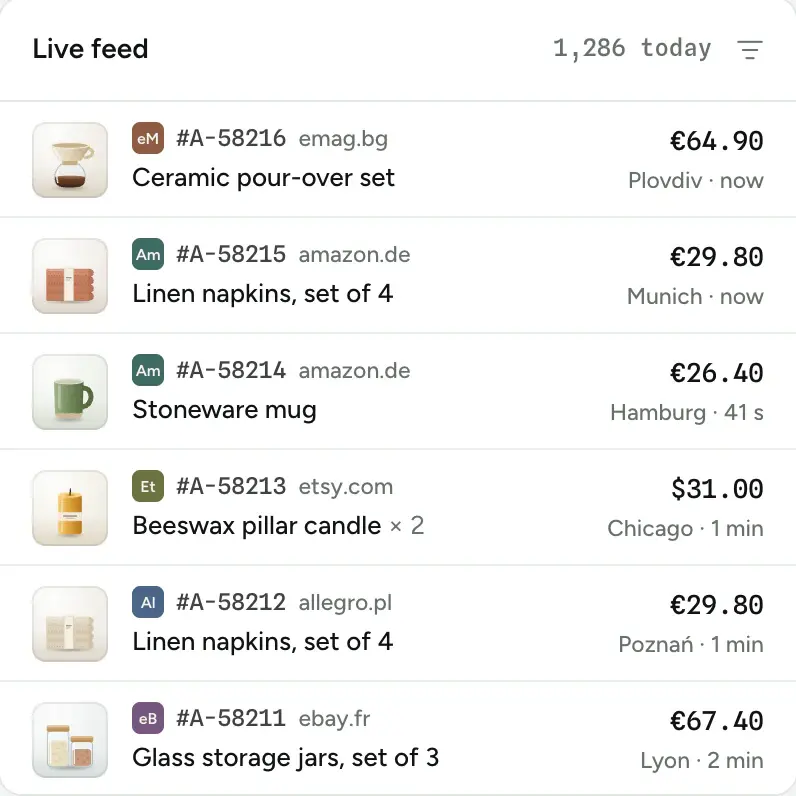
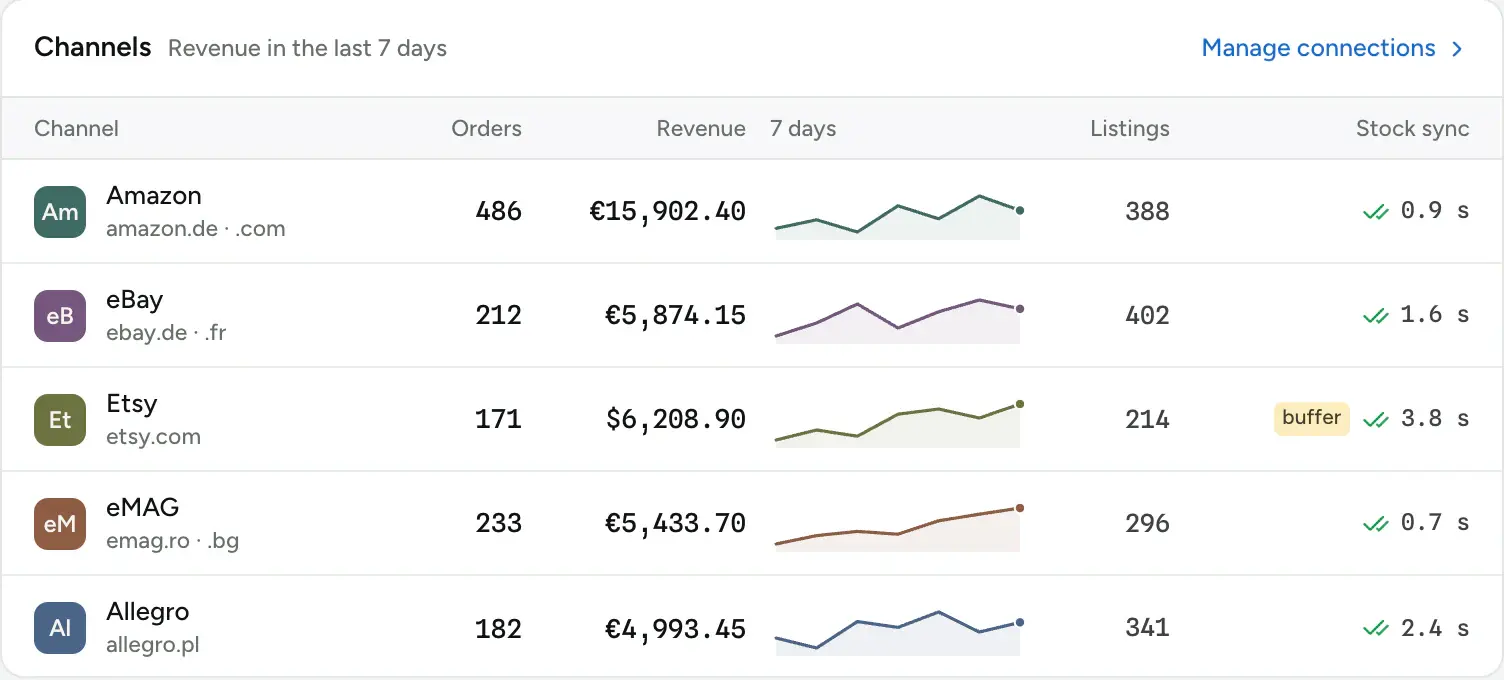
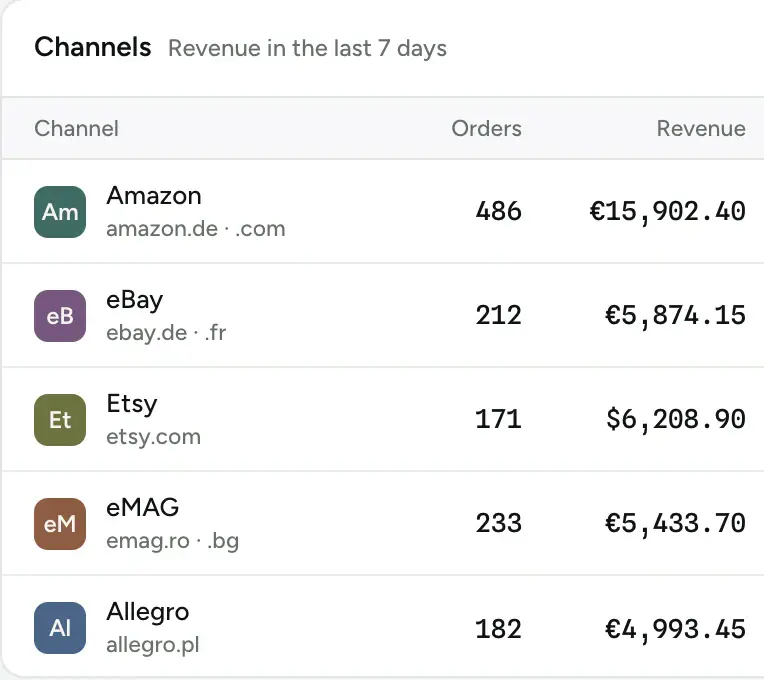
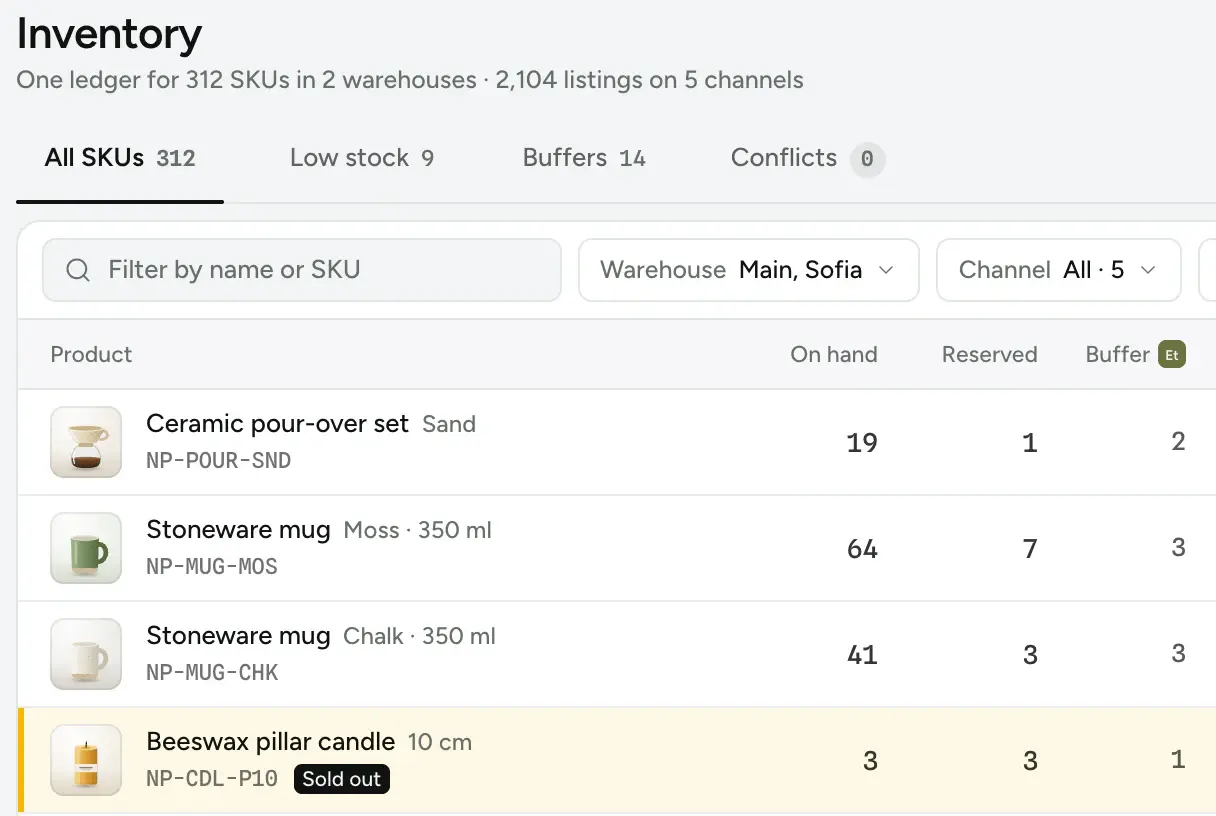
We built a multi-tenant platform for sellers on Amazon, eBay, Etsy, eMAG and Allegro: marketplace connectors, a stock ledger, one order flow, a buyer inbox with AI‑drafted replies, return rules and a Stripe integration for the project’s payments, refunds, payouts and platform subscription billing.
Read the case500,000+Orders a day, across all sellers
About40%Less time from order to dispatch
Up to$7,000A month per seller, saved on support
4 monthsThis project, from development start to production
Inside the platform
One platform, many sellers
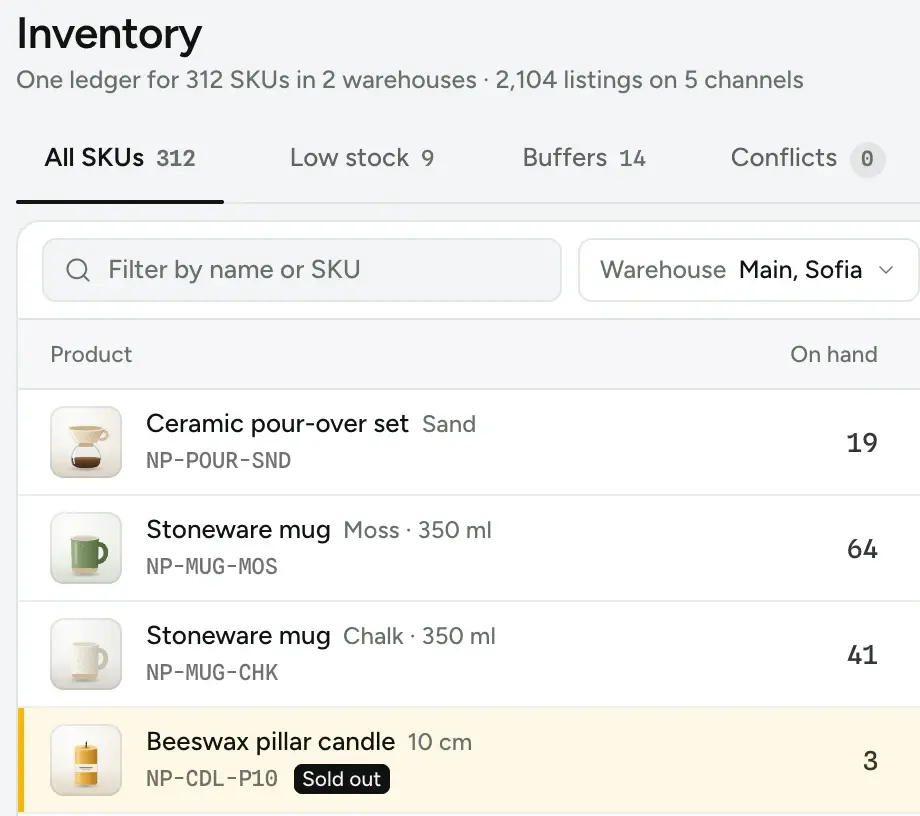
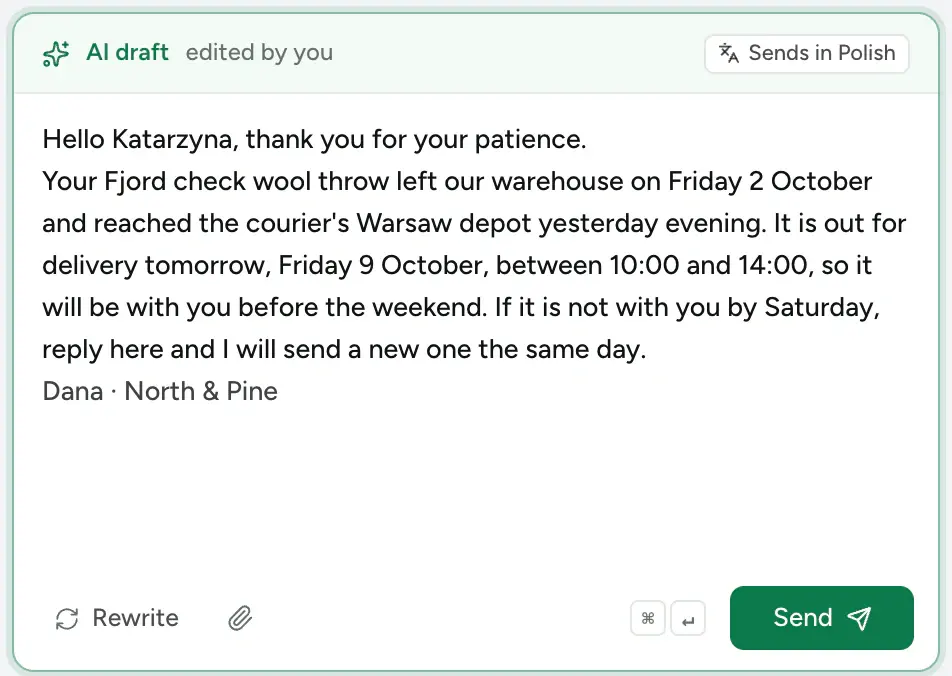
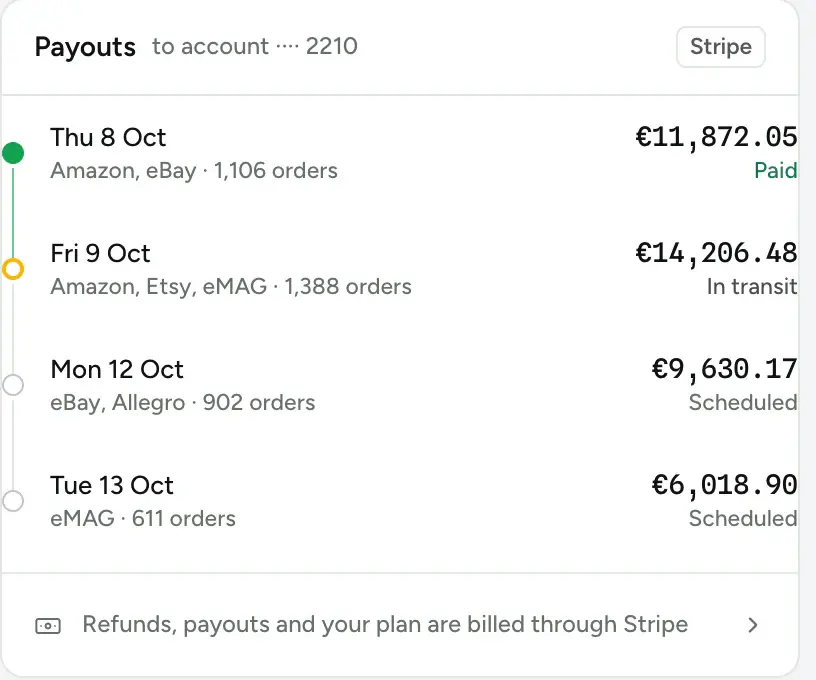
Seller accounts

Each seller works in its own account, with its own stock, rules and people.
Five marketplaces
- Amazon
- eBay
- Etsy
- eMAG
- Allegro
Each queue is paced to its marketplace’s API. An update to zero goes ahead of routine changes.
After the first version
When SaaS teams bring us in
The no-code version has done its job
It proved people will pay. Now it needs tenant separation, permissions, tests and integrations, in a codebase you own.
Customers want it connected to their tools
Payment providers, CRMs, marketplaces. Each integration brings its own API limits, data model and ways to fail.
Pricing needs limits the product enforces
Plans, seats or usage allowances written into the product and billed to match, with custom terms for larger customers.
One of the first architecture decisions
How customers share the product
Three common models. The choice is hard to change later, so we make it with you early.
Multi-tenant SaaS decisionsWatch for
More databases to migrate, back up and report across.
Watch for
Every deployment has to be upgraded and monitored, and cost grows with each one.
What we build into a SaaS product
Tenants and roles
Each customer’s data and users kept apart, with roles that decide what each person sees and does.
Plans and billing
Plans and usage limits the product itself enforces, connected to a billing provider such as Stripe.
Integrations
Connections to the tools your customers use, each through its own queue, paced to that API.
How a SaaS project runs
How we build and grow a SaaS product
Five steps, whether you are moving off a first version or extending a live product. Each ends in something you review and a decision you make.
See the full processMap the product model
Who the tenants are, how their organizations and roles work, what each plan includes and which systems the product has to connect to. For a live product we review the relevant code, architecture and data first.
What you get
- Tenant and role model
- Plans and limits
- Integration list
You decide
The whole build or one part first
Design the architecture
Tenancy model, data model, billing flow and integration pattern, agreed before development. Quotas and queues are planned here too, in case one large account's imports or traffic could slow everyone else.
What you get
- Architecture and billing flow
- Quotas and scaling plan
- Timeline and a fixed price for that scope
You decide
Approve the approach and its price
Build the core first
Development moves in milestones, ordered by risk: the part everything else depends on comes first. You try each milestone in a test environment, and every change is reviewed by a second senior engineer.
What you get
- Working increments in a test environment
- A review at each milestone
- Test results and known limitations
You decide
Accept each milestone
Billing, onboarding and launch
Plans and limits connected to the billing provider, onboarding for new customer accounts and the admin tools your team needs, then the production release.
What you get
- Plans and billing
- Onboarding and admin tools
- Production release
You decide
Approve the release
Handover and next modules
We hand over the code, design files and documentation. Ongoing development of the next modules can be arranged, planned from what real customers and real usage show.
What you get
- Code, design files and documentation
- 30 days of bug fixes
- Next release plan
You decide
Continue with us or take over
What stays with your team
Built with us.
Yours to run.
You bring a decision owner who settles scope questions quickly, and someone who knows your customers and how they buy.
01 / Yours
The code and design files
You own them, in your accounts, with access from day one.
CodeDesign files
02 / Yours
Documentation
The tenant model, architecture and billing flow, handed over with the code to support future development.
Tenant modelArchitectureBilling flow
03 / After handover
30 days of bug fixes
For 30 days after handover, we fix bugs within the delivered, agreed scope at no extra cost.
Within the delivered scopeOngoing support can be arranged
Your SaaS product.
Let’s map it.
Tell us who your customers are, how you charge them and what the product has to connect to. Those three answers shape most of the architecture, so that is where we begin.
Frequently Asked Questions
It depends on the tenancy model, the plans and billing rules, the number of integrations and their API limits, the load the product has to carry and where you start: a new build, an MVP to extend or a live product. After a first conversation we outline the work, then agree a fixed price for a clear scope before development starts. You approve the cost of any additional work before it starts.
The timeline is planned with the scope and agreed before development starts, together with a fixed price for that scope. A single part, such as one integration or plans and limits, gets its own scope and timeline. As one reference point, the marketplace seller platform reached production after four months of development; that was its timeline, not a standard length. If you are still at the first release, SaaS MVP development covers that stage.
We build plans, limits and payments into the product, connected to a billing provider such as Stripe. The product keeps its own record of each customer's plan, handles billing events that arrive more than once or out of order, and checks limits before an action, so what a customer can use matches what they pay for. The AI agent platform MVP had plans with 5, 10 or 20 agents and a token allowance as part of the delivered MVP.
Yes. We review the relevant code, architecture and data first, then agree a focused scope for the next part of the product: a new module, an integration, plans and limits, AI features or stronger tenant isolation. We can work alongside your in-house team.
When customers depend on it and the tool makes the next steps hard: tenant separation, fine-grained permissions, tests, integrations or a codebase your team can maintain. We first review what the current version does and the data it holds, then agree the scope of the new build and how customers and their data move across.
Yes. Our designers plan onboarding, dashboards and roles with the engineers who build the tenant model and billing behind them. The design side is described under SaaS design. We can also build from your existing designs.
You do. You own the code and design files, with access from day one and documentation to support future development. External services and data access are agreed upfront, your data is excluded from AI provider training, and hosting within your own infrastructure is supported.
For 30 days after handover, we fix bugs within the delivered, agreed scope at no extra cost. After that, ongoing support and the next modules can be arranged, planned from what real customers and real usage show.