
From the first order.
To the whole operation.
A hospitality SaaS we designed and developed for a client. POS, inventory, finance and customer context, connected through one product.
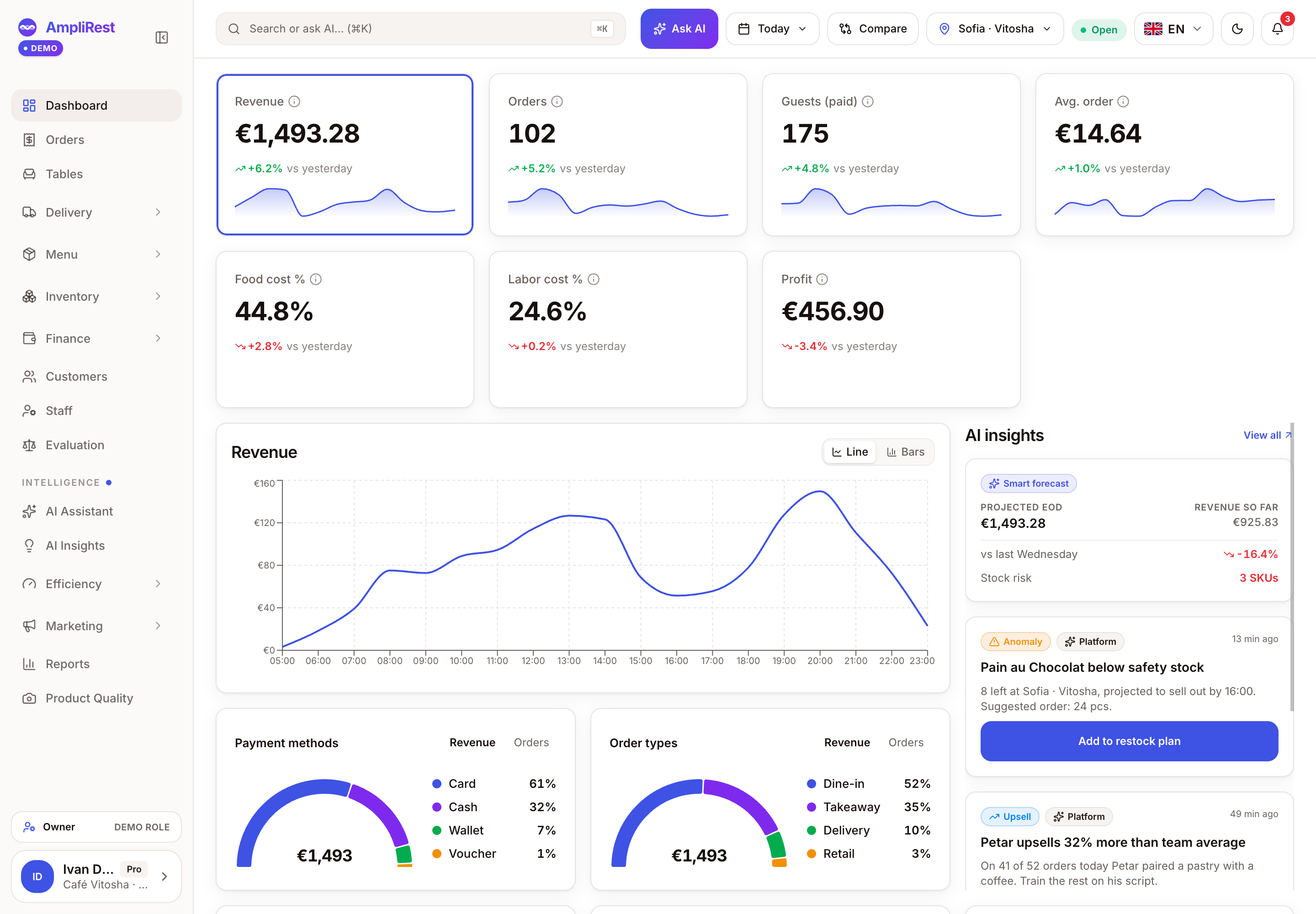
One order.
A lot rides on it.
Servers need the next service action. Managers need operational detail. Owners need the bigger picture. We designed one product to hold that shared context.
What Cursopic delivered.
The product logic.
The interface system.
The connected software.
and engineering to completion.
Product strategy & architecture
The operational model, module responsibilities and connections between roles.
UX/UI & design system
POS and administration, with consistent tables, drawers, forms and review states.
Engineering & integrations
Connected workflows across orders, stock, finance and Bulgarian fiscal requirements.
AI-assisted document review
Recognition and inventory mapping with visible proposals and operator confirmation.
The order is paid.
Its context stays.
We connected the frontline workflow to the work behind it. Each step has its own states and responsibilities within the same product.
Take the order.
Items, modifiers, customer and channel establish the context at the POS.
Keep each state visible.
Payment, kitchen and fiscal states describe different parts of the same order.
Carry the context forward.
Relevant items connect to stock write-offs. Finance and customer history retain the operational context.
Built around
the rhythm of service.
Items, payment and fiscal states stay visible in one order view. The customer and sales channel travel with the order.
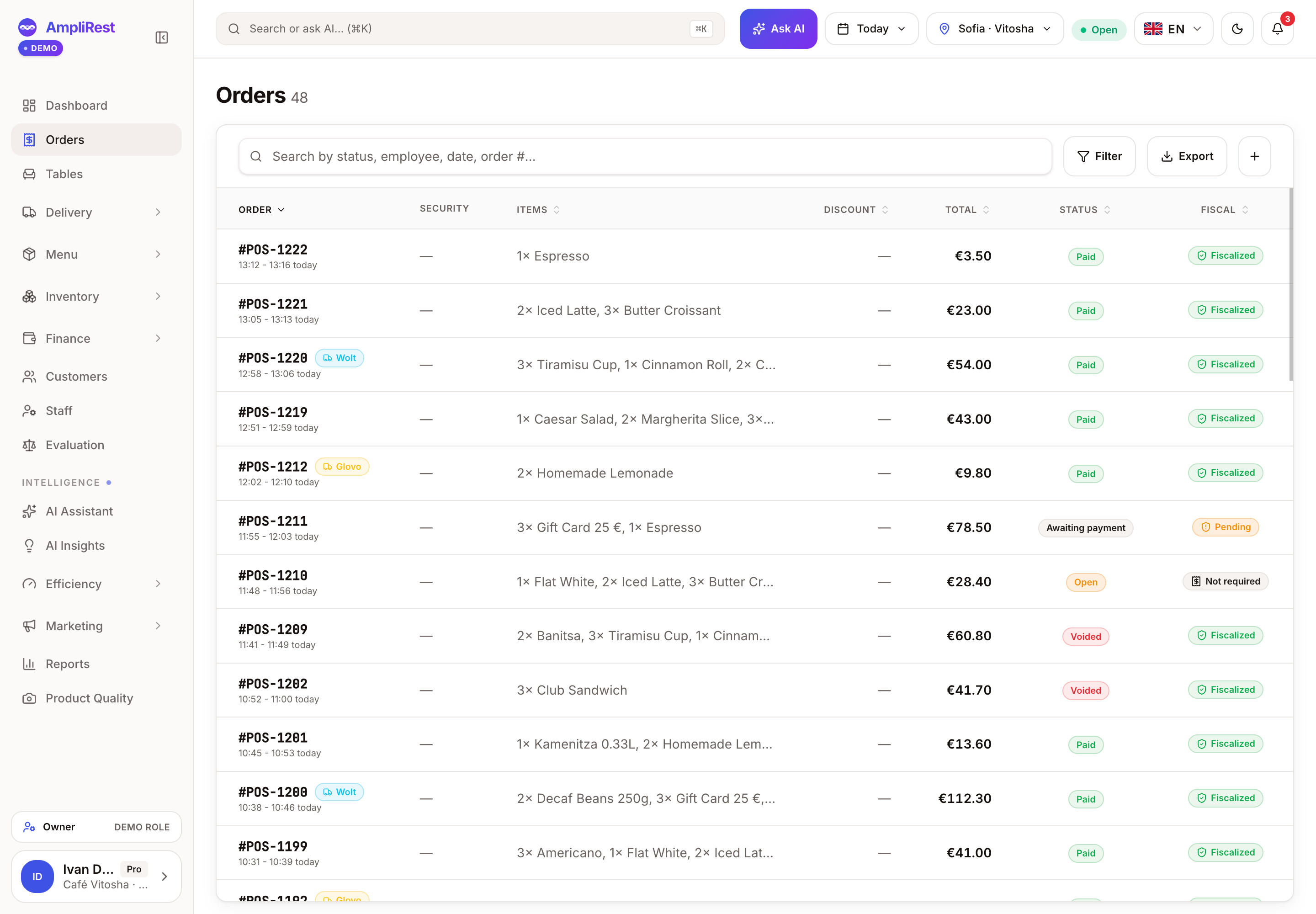
Paid is only one part of the story.
An order keeps its items, payment, fiscal and kitchen states together, alongside the customer and sales channel.
The relevant items also connect to stock write-offs. The context carries through after the payment step.
Detailed operations.
Clear everyday actions.
A shared design system gives complex workflows a consistent language. These decisions shaped both the interface and its behaviour.
Simple defaults.
Depth when needed.Channel toggles stay simple. Pricing, schedules and channel rules live one step deeper.
Open the detail.
Keep the context.Tables and contextual drawers keep the source record in view while the team works.
Show the effect.
Then confirm.Voids, refunds and stock adjustments show the consequences before confirmation.
Operational context.
A reviewable suggestion.
The assistant uses operational context to suggest a next step. The operator reviews the recommendation before acting.
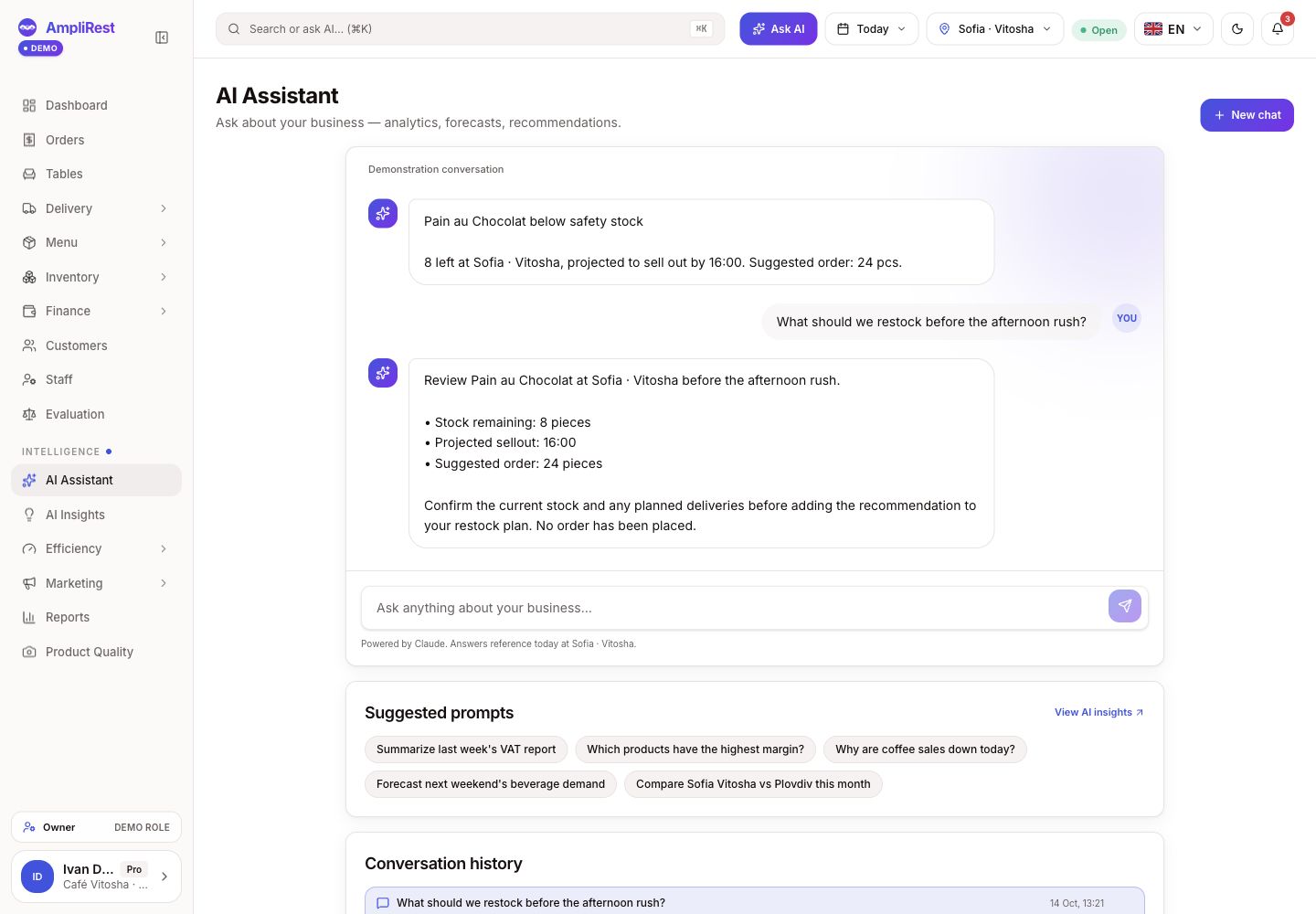
An answer with a clear boundary.
The assistant brings operational context into a suggested next step. The operator reviews the recommendation.
In this English demo, the restock advice asks the user to confirm stock and planned deliveries. No order has been placed.
AI prepares.
The operator decides.
Delivery-document entry is a concrete place to remove manual work. The recognition and mapping steps lead to a review, with confirmation before changes are committed.
- 01
Upload the delivery document.
A document starts the delivery-entry workflow.
- 02
Recognise the line items.
AI turns document content into structured suggestions.
- 03
Map to the inventory.
Proposed matches and review states stay visible.
- 04
Review. Then confirm.
The operator checks the proposal before committing changes.
One connected product.
Delivered for a client.
Amplirest brought product strategy, design and engineering together across a complete hospitality SaaS.
- Strategy.
Design.From operation to interface.
We defined the product model, roles and workflows, then designed POS, administration and a shared system of tables, drawers and forms.
- Engineering.
AI review.Connected through to delivery.
We developed connected orders, inventory, finance and Bulgarian fiscal workflows. Document recognition and inventory mapping keep human review and confirmation in the flow.